
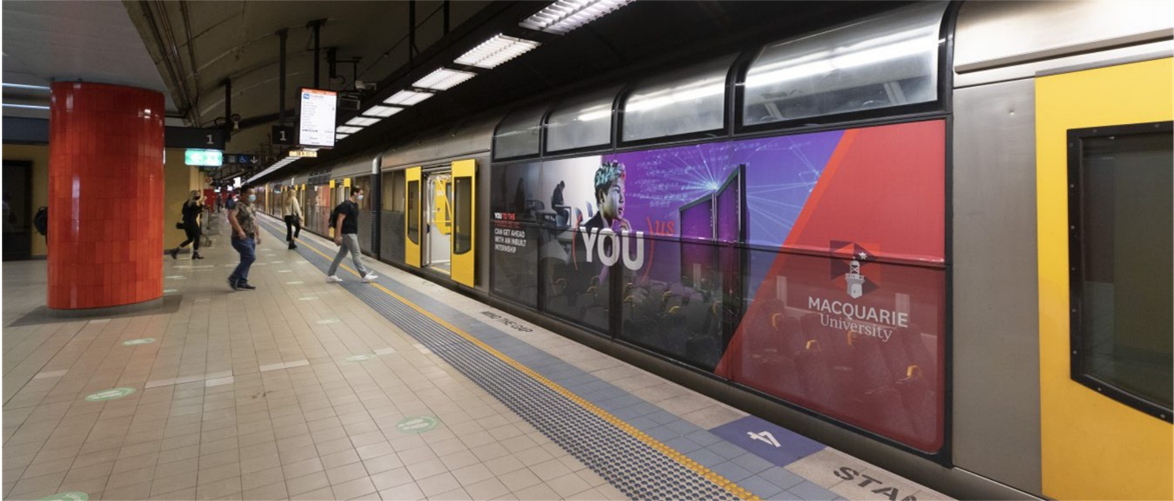
Public transport plays an important role in how people move around Australia’s cities and metropolitan areas. From trains and buses to trams, light rail and other shared transport services, public transport provides an alternative to driving for commuters, students, shoppers, tourists and local residents.
In major Australian cities, public transport connects residential suburbs with CBDs, shopping centres, universities, employment areas, entertainment precincts and other important destinations.
For many people, choosing public transport is not simply about leaving the car at home. It can be a practical way to make daily travel easier while reducing the need to deal with traffic, parking and the costs associated with driving.
At the same time, Australia’s public transport network creates valuable opportunities for businesses. Trains, buses, trams, stations and transit environments can all become highly visible advertising spaces, allowing brands to communicate with audiences during their everyday journeys.
What Is Public Transport?
Public transport refers to shared transportation services that are available for members of the public.
In Australia, public transport can include:
- Trains
- Buses
- Trams
- Light rail
- Ferries
- Coaches
- Other scheduled passenger services
The exact mix varies between cities and regions.
Melbourne, for example, has an extensive combination of trains, trams and buses, while other Australian cities have developed their own networks around local travel requirements. Official Victorian transport information provides route and timetable data covering metropolitan and regional train, tram and bus services.
Public transport therefore forms an important part of Australia’s urban infrastructure.
Why Use Public Transport in Australia?
There are many reasons people choose public transport instead of driving for every journey.
1. Avoid Traffic
Traffic congestion can make driving unpredictable, particularly during morning and afternoon peak periods.
Public transport allows passengers to travel without having to concentrate on traffic conditions themselves.
Instead of spending the entire journey behind the wheel, passengers can use their travel time to:
- Read
- Work
- Listen to music
- Watch videos
- Check emails
- Plan their day
- Relax
For regular commuters, this can make the daily journey feel considerably different from driving.
2. Reduce Parking Problems
Parking can be a major consideration when travelling into busy Australian city centres.
Finding a suitable parking space can take time, while parking fees can add to the overall cost of a journey.
Public transport can provide an alternative when the destination is already well connected by train, bus or tram.
This can be particularly useful for people travelling to major employment, shopping and entertainment areas.
3. Make Commuting More Convenient
Public transport can simplify regular commuting.
A commuter may walk to a local bus stop, travel to a train station and then continue towards the CBD.
Melbourne’s public transport network, for example, includes connections between train, tram and bus services. The network is designed around different modes serving different parts of the metropolitan area.
For people who live near useful routes, this can make public transport a practical part of their everyday routine.
4. Public Transport Can Connect Different Areas
One of the major advantages of a public transport network is connectivity.
A good network does more than move people from one central location to another.
It can connect:
Suburbs → Stations → CBD → Shopping → Universities → Employment Areas
This makes public transport particularly important for large metropolitan areas where people regularly travel between different suburbs.
5. Public Transport Can Be Useful for Students
Students are another important public transport audience.
Universities and educational institutions are often located in or near major transport corridors.
Students may use trains, buses and trams to travel between:
- Home
- Campus
- Libraries
- Shopping areas
- Accommodation
- Part-time employment
- Social destinations
This also creates opportunities for businesses targeting younger audiences through public transport advertising.
6. Public Transport for Visitors and Tourists
Visitors to Australian cities may not always have access to a private vehicle.
Public transport can provide a practical way to explore a city and reach major attractions.
Tourists may use public transport to travel between:
- Airports
- Hotels
- City centres
- Shopping precincts
- Tourist attractions
- Restaurants
- Entertainment venues
For tourism businesses, public transport environments can therefore provide valuable advertising opportunities.
Public Transport in Australia’s Major Cities
Australia’s public transport landscape differs from city to city.
Public Transport in Melbourne
Melbourne is well known for its combination of trains, trams and buses.
The network connects the CBD with surrounding suburbs and provides multiple options for commuters and visitors.
Melbourne’s tram network extends through many established inner and middle suburbs, while trains provide longer-distance metropolitan connections. Buses provide additional coverage and can connect passengers with railway stations and areas not directly served by rail.
This combination creates a large and diverse public transport audience.
Public Transport in Sydney
Sydney has an extensive public transport network serving the metropolitan area.
Train, bus, light rail, ferry and other services provide different ways for residents and visitors to move around the city.
For advertisers, Sydney’s large commuter population creates opportunities to reach audiences across stations, vehicles and major transport corridors.
Public Transport in Brisbane
Brisbane also has a strong public transport network serving the city and surrounding areas.
Businesses can consider public transport advertising when they want to build awareness among commuters, students, residents and visitors.
Public Transport in Other Australian Cities
Public transport is also important in cities including:
- Perth
- Adelaide
- Canberra
- Hobart
- Darwin
- Newcastle
- Gold Coast
The available transport modes and network structures differ between locations, so advertising strategies should be developed around the audience and infrastructure of each market.
Public Transport Is More Than a Way to Travel
For businesses, public transport represents more than transportation infrastructure.
It is also a moving communication environment.
Every day, people spend time:
- Inside trains
- Inside buses
- On trams
- At railway stations
- At bus stops
- On platforms
- Walking through transport hubs
- Waiting for services
These environments provide opportunities for brands to communicate with audiences when they are physically present in a specific location.
This is the foundation of public transport advertising.
What Is Public Transport Advertising?
Public transport advertising is a form of out-of-home advertising that places brands within public transport environments.
It can include:
- Train advertising
- Bus advertising
- Tram advertising
- Train exterior advertising
- Train interior advertising
- Station advertising
- Platform advertising
- Bus shelter advertising
- Transit hub advertising
- Digital transport advertising
Different formats can support different marketing objectives.
A business looking for broad brand awareness may consider large exterior formats, while a business wanting passengers to read more detailed information may consider interior advertising.
Why Public Transport Advertising Works
Public transport advertising has a major advantage over many other advertising environments: repeated exposure.
Regular commuters often follow similar routes every day.
A person may see the same brand:
Monday → Tuesday → Wednesday → Thursday → Friday
This repeated exposure can help make a brand more familiar.
The advertisement does not necessarily need to generate an immediate purchase.
Instead, it can build recognition over time.
When the customer eventually needs the product or service, the brand may already be familiar.
Public Transport Advertising Formats
Train Advertising
Train advertising can reach passengers and people around railway stations and transport corridors.
Formats may include interior panels, digital screens, carriage advertising and exterior train wraps.
Bus Advertising
Bus advertising can provide moving brand exposure across urban roads and local communities.
A bus can carry a campaign through multiple suburbs during the same advertising period.
Tram Advertising
Tram advertising is particularly relevant in markets such as Melbourne, where trams operate across major inner-city and suburban corridors.
Station Advertising
Stations provide opportunities to reach passengers while they wait, enter or exit the transport system.
Large-format displays can create strong visual impact, while smaller formats can deliver more detailed messaging.
Digital Public Transport Advertising
Digital screens can introduce additional flexibility into public transport campaigns.
Brands can potentially use different creative messages depending on:
- Time of day
- Campaign period
- Location
- Event
- Audience
- Promotion
Digital formats can therefore complement traditional static advertising.
Public Transport Advertising for Australian Businesses
Public transport advertising can be used by businesses across many industries.
Retail
Retailers can promote:
- New stores
- Product launches
- Seasonal promotions
- Shopping events
Property
Property developers and agencies can build awareness of:
- New developments
- Residential projects
- Suburbs
- Property services
Education
Universities, colleges and training organisations can reach students and working professionals.
Tourism
Tourism businesses can promote:
- Destinations
- Hotels
- Attractions
- Experiences
Hospitality
Restaurants, cafes and entertainment businesses can use nearby transport environments to build local awareness.
Financial Services
Banks, lenders and financial service providers can use public transport advertising for brand awareness and targeted campaigns.
Healthcare
Healthcare businesses can use transit environments to build awareness of services and locations.
Public Transport Advertising and Digital Marketing
Public transport campaigns do not have to operate separately from online marketing.
A strong campaign can connect offline and digital channels.
For example:
Train advertisement → Google Search → Website → Enquiry
Or:
Bus advertisement → QR Code → Landing Page → Booking
Or:
Station advertising → Social Media → Website → Purchase
This makes it possible to combine the high visibility of outdoor media with the measurable nature of digital marketing.
How to Create an Effective Public Transport Campaign
A successful public transport advertising campaign starts with a clear objective.
Define the Audience
Ask:
- Who are we trying to reach?
- Where do they travel?
- What transport do they use?
- What suburbs are important?
- What time of day are they travelling?
Select Relevant Locations
The biggest network is not necessarily the best option.
A campaign should focus on locations where the target audience is most likely to be present.
Keep the Creative Simple
People may only have a few seconds to see an advertisement.
The main message should therefore be immediately understandable.
Use:
- Strong branding
- Short headlines
- High-quality images
- Clear typography
- One main message
- Simple calls to action
Connect Offline and Online
Where appropriate, use:
- QR codes
- Campaign landing pages
- Dedicated URLs
- Promotional codes
- Social media campaigns
This can help businesses measure customer response.
Measuring Public Transport Advertising
Measuring an outdoor campaign is different from measuring a direct-response digital advertisement.
Businesses can consider:
- Estimated audience reach
- Impressions
- Website traffic
- QR scans
- Branded searches
- Social engagement
- Phone enquiries
- Lead generation
- Sales
- Brand awareness
The right metrics depend on the campaign objective.
If the objective is brand awareness, immediate sales may not be the most appropriate measure.
Is Public Transport Better Than Driving?
There is no single answer for every journey.
Driving can be practical when travelling to locations with limited public transport access, carrying equipment or travelling with several people.
However, public transport can be a practical alternative for many regular urban journeys.
The decision can depend on:
- Distance
- Location
- Traffic
- Parking
- Cost
- Time
- Service frequency
- Personal preference
For people living and working near established transport networks, public transport can provide a convenient alternative to driving every day.
The Future of Public Transport in Australia
As Australian cities continue to grow, efficient transportation will remain important.
Public transport networks need to support people travelling between expanding residential areas, employment centres, universities, shopping precincts and city centres.
Technology is also changing the public transport experience.
Passengers increasingly use mobile apps, digital journey information and real-time service updates to plan trips.
For advertisers, this evolving environment creates new opportunities to connect physical public transport advertising with digital campaigns.
A passenger may see an advertisement inside a train, interact with a QR code, search for the brand online and eventually become a customer.
That connection between physical and digital media is becoming increasingly important.
Frequently Asked Questions About Public Transport in Australia
What is public transport in Australia?
Public transport in Australia includes shared passenger services such as trains, buses, trams, light rail, ferries and coaches. The available services vary between cities and regions.
What are the main types of public transport?
The main types include trains, buses, trams, light rail and ferries. Different Australian cities have different combinations of these services.
Why is public transport important in Australia?
Public transport connects people with employment, education, shopping, entertainment and residential areas. It can also provide an alternative to driving for regular urban journeys.
Is public transport available in Melbourne?
Yes. Melbourne has an extensive network of trains, trams and buses serving metropolitan and regional areas. Official Victorian transport data includes timetable and route information for these services.
What is public transport advertising?
Public transport advertising places advertisements within transportation environments such as trains, buses, trams, stations, platforms and other transit locations.
What types of public transport advertising are available?
Common formats include train advertising, bus advertising, tram advertising, train exterior advertising, train interior advertising, station advertising, platform advertising and digital transit advertising.
Is public transport advertising effective for brand awareness?
It can be effective because commuters and passengers may encounter the same advertisement repeatedly during regular journeys. Strong branding and consistent creative can help improve recognition.
Can public transport advertising target specific suburbs?
Campaign planning can take geographic areas, transport routes and audience behaviour into account. Available targeting options depend on the relevant transport network and media inventory.
Can public transport advertising be combined with Google Ads?
Yes. Public transport advertising can create offline brand awareness while Google Ads can capture customers who later search for the brand, product or service.
Can QR codes be used in public transport advertising?
QR codes can be used in suitable advertising formats. They should link to a mobile-friendly landing page and provide a clear reason for the customer to scan.
Which businesses use public transport advertising?
Retail, property, education, tourism, hospitality, finance, healthcare, technology and entertainment businesses can all use public transport advertising when the audience matches their target market.
Is public transport advertising available in Sydney and Melbourne?
Public transport advertising opportunities exist across major Australian metropolitan markets, although available formats, locations and inventory vary between transport networks.
How do you measure public transport advertising?
Campaigns can be assessed using estimated reach and impressions as well as digital indicators such as website traffic, QR scans, branded searches, enquiries and conversions.
Public Transport Connects People and Brands
Public transport is an important part of everyday life across Australia’s major cities.
For passengers, it provides another way to travel between home, work, education, shopping and entertainment.
For businesses, the public transport environment provides an opportunity to build visibility through train advertising, bus advertising, tram advertising, station media and other forms of transit advertising.
The most effective campaigns combine the right location, audience, creative and message.
When public transport advertising is integrated with digital marketing, search and social media, businesses can create a connected customer journey from physical brand awareness to online engagement.
Looking to reach commuters and audiences across Australia? S&J Media Group can help develop a public transport advertising strategy based on your target market, location and campaign objectives.
GET IN TOUCH WITH OUR TEAM

Melbourne
Head Office
Level 7, 492 St Kilda Road,
Melbourne Vic 3004
Ph: 03 9867 1022
info@sjmediagroup.com.au

Sydney
Office
Level 3, WeWork c/o S&J Media Group,
100 Harris Street,Pyrmont NSW 2009
Ph: 02 8424 6100
info@sjmediagroup.com.au

Brisbane
Office
WeWork c/o S&J Media Group,
310 Edward St,Brisbane City QLD 4000
Ph: 07 3217 2233
info@sjmediagroup.com.au